Many children may experience difficulty pronouncing words and repeating certain syllables, a condition known as stuttering, which typically appears between the ages of two and six.
In many cases, stuttering is normal and resolves on its own. However, if it persists or worsens over time, it may indicate an underlying problem requiring intervention.
What is stuttering in children
Stuttering, or stammering, is a speech disorder that hinders a child's ability to speak fluently. The child may repeat syllables or letters, or pause suddenly while speaking.
Causes of stuttering in children
The exact causes of stuttering in children are still unknown. However, several factors can contribute to its development, including:
- A family history of stuttering.
- Anxiety or fear in the child.
- Psychological stress or trauma in the child.
- Boys are more likely to stutter than girls.
- Neuromuscular disorders affecting the muscles responsible for speech.
- Frequent correction of the child's speech errors by parents.
Symptoms of Stuttering in Children

Symptoms vary from child to child depending on the severity of the stuttering, but stuttering is the primary indicator of a problem. Other symptoms include:
- Increased stuttering during stress and decreased stuttering when the child is relaxed.
- Head shaking and facial muscle tension while speaking.
- Frequent blinking or lip trembling.
- Difficulty starting to speak or pronouncing the first word.
- Repetition of certain syllables, sounds, or words. Pausing during speech.
- Opening the mouth for a few seconds without uttering a word.
- Prolonged or slow speech.
Types of Stuttering in Children
There are several types of stuttering in children, varying according to the cause from one child to another. These include:
- Developmental Stuttering: The most common type among children aged 2-5 years, which gradually disappears as language skills develop.
- Neuropsychological Stuttering: Occurs as a result of a disruption in nerve signals or exposure to stress or psychological trauma.
- Acquired stuttering: This occurs when a child experiences a significant and sudden change in their environment.
Diagnosing Stuttering in Children
A speech therapist diagnoses the child by reviewing their family history, the onset of stuttering, and its frequency. The therapist then conducts a language assessment to determine the type of stuttering.
Based on this assessment, the therapist develops a speech therapy plan. They may also request neurological or medical tests to determine if the stuttering has an organic cause.
Treating Stuttering in Children
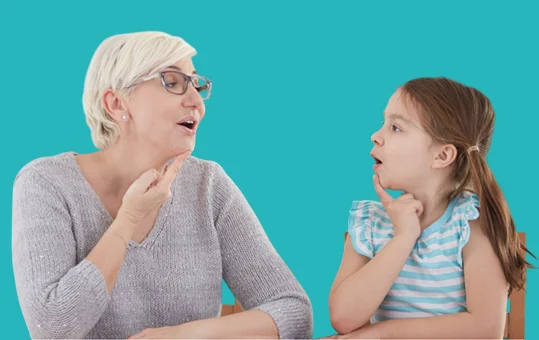
Treatment for stuttering in children depends on the child's age and the severity of the condition:
- Psychological therapy.
- Behavioral therapy.
- Speech therapy.
- Practicing simple language exercises at home.
Preventing Stuttering in Children
While stuttering in children may not be preventable if the cause is genetic, the likelihood of its onset and the development of its symptoms can be reduced by:
- Speaking slowly in front of the child.
- Not interrupting the child while they are speaking. Avoid scolding the child or comparing them to others.
- Encourage them to speak without fear of making mistakes.
Frequently Asked Questions
What are the causes of sudden stuttering in childen
Sudden stuttering in children can result from psychological trauma or a sudden change in speech.
What is the difference between stuttering and stammering
Stuttering is a temporary speech disorder, while stammering is a chronic speech disorder.
Is stuttering normal at age three
Yes, because children at this age are still learning new words and language skills.
Is stuttering a mental illness
No, it is not a mental illness, but it can result from psychological factors such as stress, psychological pressure, or trauma.
Article Summary
Stuttering, also known as stammering, is a speech disorder that prevents a child from speaking fluently and causes them to repeat certain letters and syllables. It can be caused by psychological, genetic, or environmental factors.
When symptoms are observed in a child, it is preferable to go to a speech therapist to determine whether it requires speech therapy sessions or if it is the result of a psychological and genetic disorder, which requires going to a specialist doctor.